
In commercial landscaping, architectural decoration, and public space design, greenery is no longer judged solely by appearance—it is evaluated based on durability, lifecycle cost, environmental resistance, and maintenance efficiency. Traditional natural plants, while aesthetically appealing, often fail to meet these operational requirements due to watering needs, seasonal changes, and high maintenance costs.
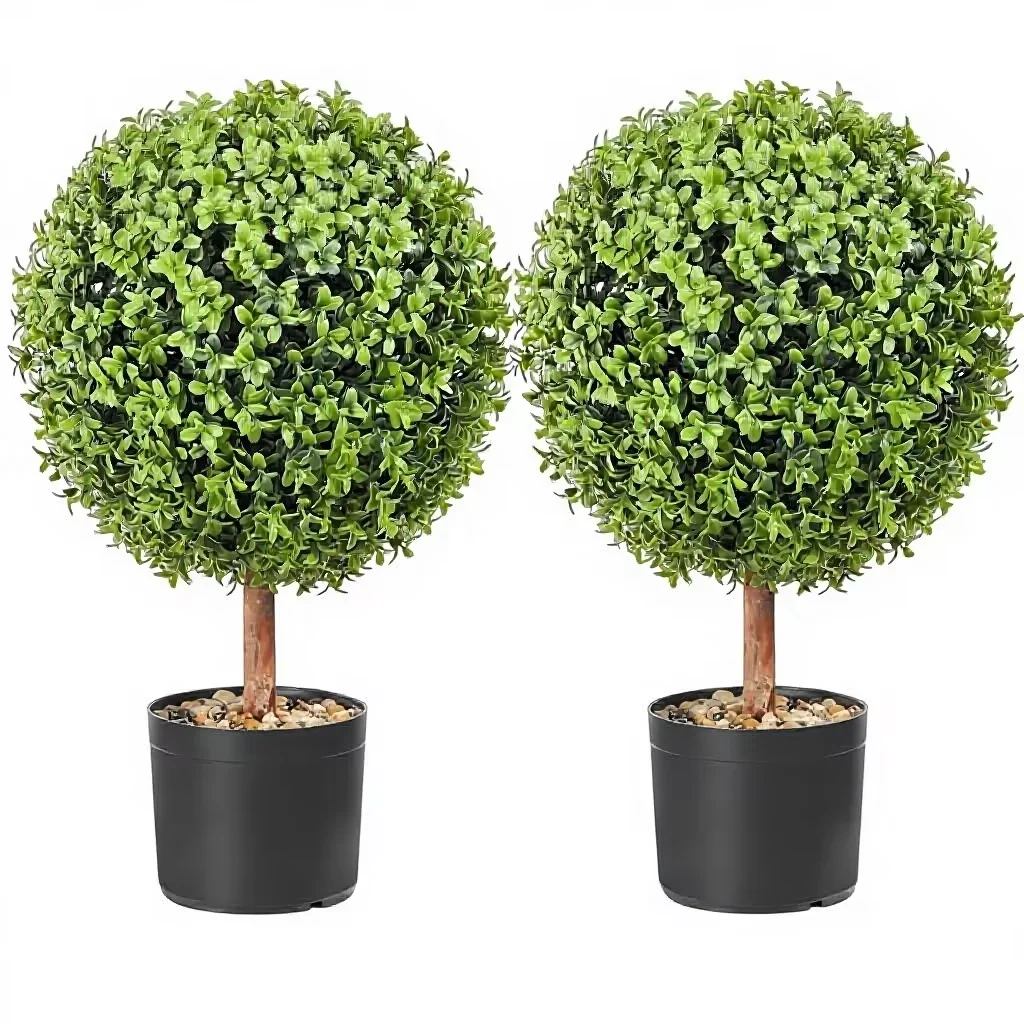
This is where the boxwood artificial plant has become a strategic alternative. Engineered with advanced polymer materials, UV-resistant coatings, and structural design optimization, modern artificial boxwood products deliver consistent visual quality while significantly reducing operational burden.
This article provides a technical, application-driven analysis of boxwood artificial plants, focusing on:
-
Material composition and durability
-
UV resistance and outdoor performance
-
Structural design and installation efficiency
-
Lifecycle cost comparison
-
Application scenarios across commercial and industrial environments
The goal is to help decision-makers identify how high-quality artificial boxwood solutions can optimize long-term performance and reduce total cost of ownership.
1. Material Composition and Structural Engineering
1.1 Core Materials Used in Boxwood Artificial Plants
High-quality boxwood artificial plants are typically manufactured using:
-
Polyethylene (PE): Provides flexibility, softness, and natural texture
-
Polypropylene (PP): Enhances structural rigidity and durability
-
UV-stabilized additives: Prevent material degradation under sunlight exposure
These materials are selected based on their ability to:
-
Maintain shape under temperature fluctuations
-
Resist cracking and deformation
-
Provide consistent color retention
1.2 Leaf Density and Coverage Metrics
One of the most critical quality indicators is leaf density, which directly affects visual realism and coverage performance.
| Parameter | Standard Grade | High-Quality Grade |
|---|---|---|
| Leaf Count per m² | 800–1200 | 1500–2500 |
| Coverage Rate | 85–90% | 95–98% |
| Panel Thickness | 25–35 mm | 40–60 mm |
Higher density results in:
-
Better visual fullness
-
Improved light blocking (useful for privacy walls)
-
Reduced need for layering during installation
2. UV Resistance and Outdoor Durability
2.1 UV Stabilization Technology
Outdoor applications require materials that can withstand prolonged UV exposure without fading or degradation.
Dongguan Ocean Harvest Arts & Crafts Co., Ltd. integrates:
-
UV inhibitors within raw materials
-
Surface coating treatments to enhance resistance
2.2 Performance Metrics
| Parameter | Value |
|---|---|
| UV Resistance Duration | 3–5 years |
| Color Retention | ≥90% after exposure |
| Temperature Range | -20°C to 60°C |
2.3 Environmental Resistance
Boxwood artificial plants demonstrate strong resistance to:
-
Rain and humidity
-
Wind and dust
-
Temperature variation
This ensures consistent outdoor performance without seasonal degradation.
3. Structural Design and Installation Efficiency
3.1 Modular Panel System
Most boxwood artificial plants are designed in modular panel formats, typically:
-
50 cm × 50 cm
-
100 cm × 100 cm
Key advantages:
-
Quick installation
-
Easy replacement of damaged sections
-
Scalability for large projects
3.2 Connection Mechanisms
-
Interlocking grids
-
Clip-on systems
-
Reinforced backing structures
These features enable:
-
Installation time reduction by 30–50% compared to natural planting
-
Minimal need for specialized tools
4. Maintenance and Lifecycle Cost Analysis
4.1 Maintenance Requirements
| Factor | Natural Boxwood | Artificial Boxwood |
|---|---|---|
| Watering | Required | Not required |
| Pruning | Regular | None |
| Pest Control | Required | None |
| Replacement Cycle | 1–3 years | 5+ years |
4.2 Cost Comparison (5-Year Period)
| Cost Component | Natural Plants | Artificial Plants |
|---|---|---|
| Initial Cost | Medium | Higher |
| Maintenance | High | Low |
| Replacement | Frequent | Rare |
| Total Cost | High | Lower |
Key Insight:
Artificial boxwood plants reduce total lifecycle cost by 30–60%, especially in large-scale commercial projects.
5. Application Scenarios
5.1 Commercial Landscaping
-
Shopping malls
-
Office buildings
-
Hotels and resorts
Benefits:
-
Consistent aesthetic quality
-
No seasonal variation
-
Reduced maintenance labor
5.2 Outdoor Facades and Green Walls
-
Building exteriors
-
Privacy walls
-
Urban vertical landscaping
Technical value:
-
High coverage density
-
UV-resistant performance
-
Lightweight installation
5.3 Indoor Decoration
-
Retail spaces
-
Exhibition halls
-
Restaurants
Advantages:
-
No lighting dependency
-
Flexible design integration
-
Long-term visual consistency
6. Comparison with Natural Plants and Alternative Materials
6.1 Artificial vs Natural Boxwood
| Feature | Natural Boxwood | Artificial Boxwood |
|---|---|---|
| Maintenance | High | Minimal |
| Lifespan | 1–3 years | 5+ years |
| Environmental Control | Required | Not required |
| Consistency | Variable | Stable |
6.2 Artificial Boxwood vs Other Artificial Plants
| Feature | Generic Artificial Plants | Boxwood Artificial Plant |
|---|---|---|
| Density | Medium | High |
| Coverage | Moderate | Excellent |
| Application Range | Limited | Wide |
| Structural Strength | Moderate | High |
7. Engineering Considerations for Large Projects
7.1 Load and Structural Support
-
Lightweight design reduces structural load
-
Suitable for vertical installations without reinforcement
7.2 Fire Resistance
-
Optional flame-retardant materials available
-
Compliance with building safety standards
7.3 Customization
Dongguan Ocean Harvest Arts & Crafts Co., Ltd. provides:
-
Custom sizes and densities
-
Color variations
-
UV and fire-retardant options
8. Supply Chain and Quality Control
Reliable suppliers ensure:
-
Consistent leaf color and density
-
Strong backing materials
-
UV certification and testing
Ocean Harvest, with its expertise in artificial plants, trees, and decorative solutions, focuses on:
-
R&D-driven product design
-
Strict quality control
-
Export-ready production capabilities
9. Decision-Making Framework
When selecting a boxwood artificial plant, consider:
9.1 Performance Metrics
-
Leaf density
-
UV resistance duration
-
Material quality
9.2 Application Requirements
-
Indoor vs outdoor use
-
Coverage area
-
Installation complexity
9.3 Cost Efficiency
-
Initial investment vs lifecycle cost
-
Maintenance savings
-
Replacement frequency