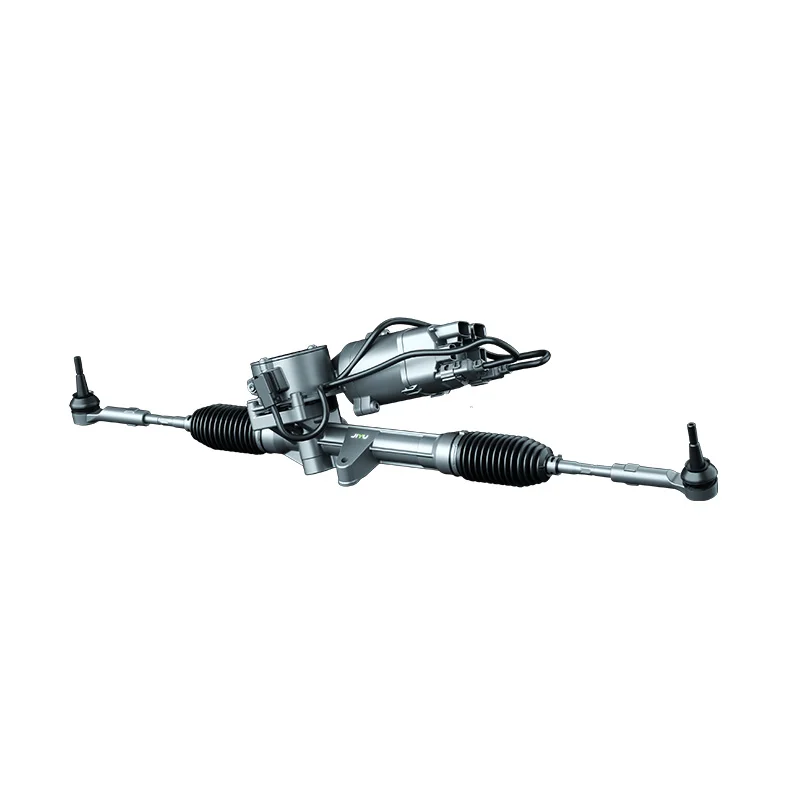

The automotive industry is under continuous pressure to reduce vehicle weight without compromising structural reliability. This requirement has become even more important as manufacturers develop electric vehicles, hybrid platforms and more compact electronic systems. Aluminum die casting provides a practical manufacturing route for producing lightweight components with complex geometries, integrated mounting features and consistent dimensions at production scale.
Unlike traditional manufacturing approaches that may require several separate components, aluminum casting allows engineers to combine ribs, bosses, housings and other structural features into a single part. This can reduce assembly complexity while making better use of aluminum's low density and useful mechanical properties.
The role of aluminum automotive components is therefore expanding beyond conventional engine and transmission applications. Battery systems, electric drive units, thermal management assemblies and electronic housings are creating new opportunities for lightweight cast components.
The Shift Toward Lightweight Automotive Structures
Reducing vehicle weight has always been an important engineering objective, but the reasons behind it have changed as vehicle technology has evolved.
For internal combustion vehicles, lower weight can contribute to improved fuel efficiency and handling. For electric vehicles, reducing unnecessary mass can help manufacturers manage energy consumption and improve overall vehicle efficiency. Every component therefore receives greater attention during platform development.
Aluminum is attractive because its density is substantially lower than that of conventional steel while still offering useful strength and corrosion resistance when the correct alloy and design are selected.
The challenge is not simply replacing a steel part with an aluminum version. A direct material substitution may not deliver the expected result because the two materials behave differently under load.
Engineers often need to redesign the component around the characteristics of aluminum. Instead of maintaining a thick solid section, the design can use:
-
Reinforcing ribs
-
Strategic bosses
-
Curved transitions
-
Localized wall thickness
-
Integrated mounting structures
-
Geometry optimized for casting
This is where die casting becomes particularly valuable.
A well-designed casting can place material where it contributes to stiffness while removing unnecessary mass from low-stress areas. The result is not merely a lighter component, but a component designed around both its functional requirements and manufacturing process.
For manufacturers working on lightweight automotive parts, this design-manufacturing relationship is becoming increasingly important.
Why Die Cast Aluminum Works Well for Complex Automotive Components
Modern automotive components rarely have simple block-shaped geometries. A typical housing may need mounting points, cable passages, cooling features, reinforcing ribs and interfaces for several other components.
Producing all of these features separately can increase assembly work and introduce additional interfaces.
A die-cast aluminum component can integrate many of these details into the original part geometry.
For example, an automotive electronics housing may require:
-
Internal support structures
-
Mounting bosses
-
Reinforcing ribs
-
Connector openings
-
Cover interfaces
-
Fastener locations
-
Heat dissipation surfaces
Instead of manufacturing each structural feature independently, casting can create much of the geometry in one production step.
This integration is one of the main reasons automotive aluminum casting remains relevant as vehicle systems become more compact.
It also creates opportunities for engineers to rethink component architecture.
Rather than asking how an existing steel component can be manufactured from aluminum, engineers can ask a more useful question:
What would the component look like if it were designed specifically for aluminum die casting?
That change in approach can produce a different geometry with fewer components, reduced assembly requirements and improved use of available space.
For high-volume automotive programs, this can have an impact well beyond the individual casting.
Applications Across Electric and Conventional Vehicle Systems
The growth of electric vehicles has created additional demand for aluminum components because many electric systems require lightweight housings and structural parts.
Battery-related applications are an obvious example. Battery systems need protection, structural support and thermal management while keeping unnecessary weight under control.
Aluminum castings can be used in selected battery system structures, covers, housings and supporting components depending on the design and performance requirements.
Electric drive systems also create opportunities.
A drive unit may contain a motor, reduction gears, bearings, electronics and thermal management components within a relatively compact package. The housing has to provide sufficient structural stiffness while maintaining accurate interfaces for internal components.
A cast aluminum housing can provide the basic structural form, with critical interfaces finished through secondary machining where required.
Other potential applications include:
| Vehicle System | Potential Aluminum Cast Components |
|---|---|
| Electric drive | Motor housings, gearbox housings, structural covers |
| Battery system | Housing sections, covers, brackets and support structures |
| Thermal management | Pump housings, valve bodies and cooling-related components |
| Electronics | Controller housings and protective enclosures |
| Chassis | Mounting brackets and selected structural components |
| Powertrain | Transmission housings and accessory housings |
The exact application depends on loading, temperature, corrosion exposure, sealing requirements and the selected aluminum alloy.
The important trend is that aluminum casting is no longer limited to a narrow group of traditional engine components.
Designing Cast Components for Strength Without Adding Unnecessary Weight
Lightweight design requires more than reducing wall thickness.
If too much material is removed from a component without considering stress distribution, the part may become less rigid or more vulnerable to fatigue. Automotive components can experience vibration, repeated loading, temperature changes and impacts throughout their operating life.
For this reason, engineers typically focus on stiffness and load paths rather than simply reducing the overall amount of material.
Ribs are particularly useful in this context.
A properly positioned rib can increase local stiffness without requiring a large increase in overall wall thickness. Similarly, bosses can reinforce mounting points where bolts or fasteners introduce concentrated loads.
Fillets and smooth transitions can also help avoid abrupt changes in geometry.
During the development of a cast aluminum automotive component, engineers may review:
-
Load direction
-
Stress concentration
-
Wall thickness
-
Rib position
-
Mounting point reinforcement
-
Thermal expansion
-
Vibration exposure
-
Machining allowance
-
Casting accessibility
Simulation can support this process, but the manufacturing process still needs to be considered.
A design that performs well in a computer model may create difficulties during actual casting if it contains unsuitable wall transitions, inaccessible features or excessive variation in section thickness.
The best results normally come from engineering and manufacturing teams reviewing the design together.
The Role of Casting Design in Production Consistency
Automotive suppliers are expected to deliver large numbers of components with stable dimensions and repeatable quality. A component that works well as a single prototype may still require significant development before it is ready for long-term production.
Die design, alloy selection, process parameters and part geometry all influence production consistency.
The casting process needs to account for the behavior of molten aluminum as it fills and solidifies inside the die. Poorly designed geometry can increase the risk of defects or dimensional variation.
For this reason, casting development often considers:
-
Metal flow
-
Filling behavior
-
Solidification
-
Cooling conditions
-
Ejection
-
Potential distortion
-
Critical dimensional features
This is particularly important for larger or more complex automotive components.
Consistent wall sections can help reduce uneven thermal behavior. Appropriate transitions can reduce abrupt changes in material thickness. Proper draft can also support reliable part removal from the die.
The final component is therefore influenced by decisions made long before the first production batch.
This is one reason buyers should evaluate not only whether a supplier offers automotive die casting, but also how much engineering support is available before production begins.
A supplier with experience in casting simulation, mold development, CNC finishing and inspection can identify potential manufacturing problems earlier in the project.
Combining Die Casting With Precision Machining
Although die casting can create complex near-net shapes, some automotive interfaces still require additional machining.
This is not necessarily a weakness of casting. In many cases, it is an intentional manufacturing strategy.
A component can be cast with sufficient material around critical features, and CNC equipment can then finish those areas to the required specification.
For example, an automotive housing may have several surfaces that do not require tight tolerances, while a few bearing seats or mounting holes require much greater dimensional control.
Machining only those areas can be more practical than producing the entire component from a solid aluminum block.
A typical production sequence could involve:
Die casting → trimming → cleaning → CNC machining → deburring → inspection → surface treatment
This approach allows each manufacturing method to handle the work it is best suited for.
The casting creates the overall structure efficiently, while machining handles precision interfaces.
For buyers evaluating an aluminum die casting manufacturer, it is worth checking whether the supplier can provide this complete process or whether casting and machining have to be managed through separate vendors.
Integrated production can simplify communication, especially when dimensional issues involve both the casting and machined features.
It also makes engineering feedback easier because casting and machining teams can work from the same component requirements.
A More Integrated Approach to Automotive Aluminum Manufacturing
The development of lighter vehicles is changing how automotive components are designed. Weight reduction, packaging efficiency and component integration are increasingly considered together rather than as separate engineering goals.
This creates a strong role for aluminum die casting in applications where complex geometry and repeatable production are required.
The most successful projects generally start with the complete function of the component.
Engineers first identify what the part must withstand, how it connects to neighboring components and which surfaces require precision. The casting design can then be developed around those requirements.
Instead of removing material after machining, the design can create structural efficiency from the beginning. Instead of adding separate brackets, some mounting functions can be integrated into the casting. Instead of machining an entire housing from a solid block, only the critical interfaces can be finished after casting.
This approach can make aluminum casting more than a production method. It becomes part of the product design strategy.
For automotive manufacturers, that distinction matters.
The future of lightweight vehicle manufacturing will not depend on one material or one process alone. It will depend on how effectively materials, geometry, manufacturing technology and quality control are combined.
Aluminum die casting has a particularly useful position within this system because it connects lightweight material selection with scalable production and complex component integration. When the design is developed with casting requirements in mind and precision machining is applied only where necessary, manufacturers can create components that meet demanding automotive requirements without adding unnecessary complexity.
For suppliers and purchasing teams, the key is to evaluate the complete manufacturing capability rather than focusing on the casting process in isolation. Material expertise, tooling development, casting control, CNC machining and inspection all contribute to the final quality of an automotive component.
As vehicle platforms continue to evolve, especially in electric mobility and integrated electronic systems, these capabilities will remain important for developing lighter, more compact and more functional aluminum automotive parts.
www.sieguss.com
SIEG-HUAO