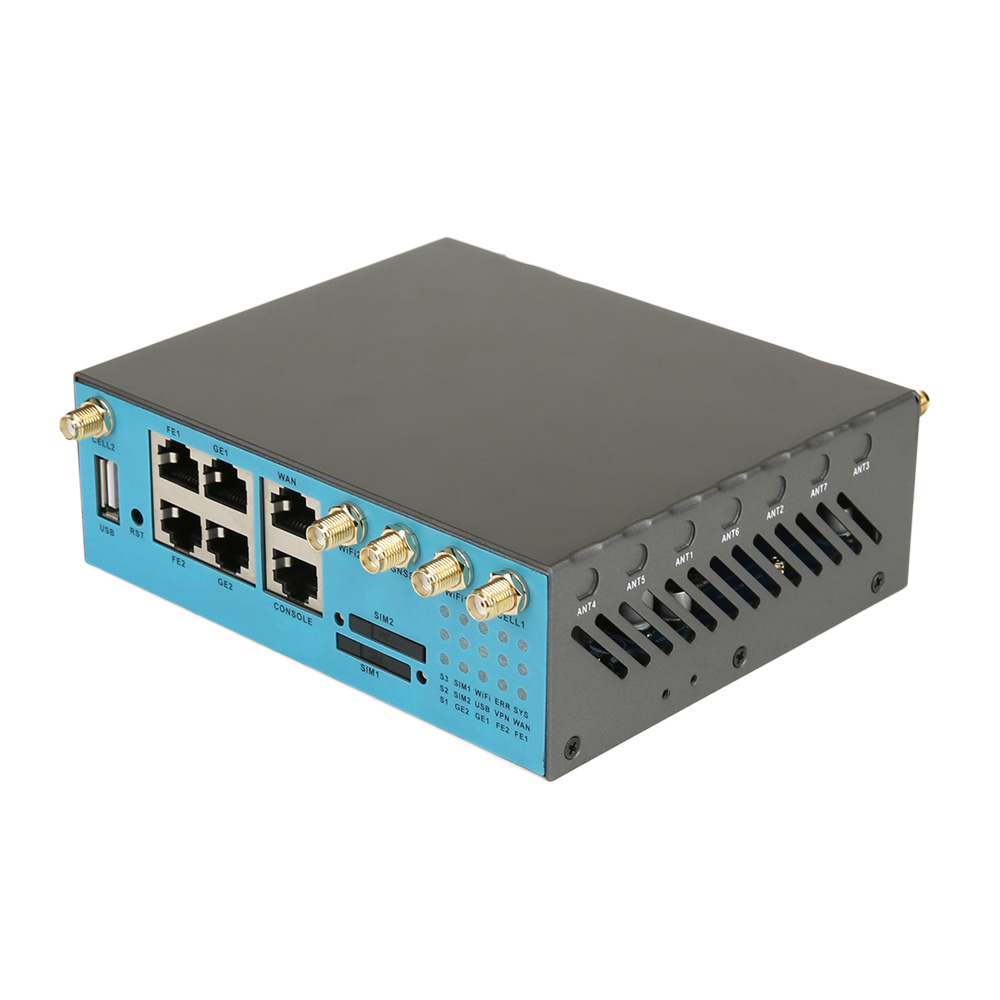

For mobile operators, internet service providers, and managed service companies, the device on the customer's wall is part of the product. When a business buys a managed 5G connection, a fixed wireless service, or an IoT connectivity plan, it judges the service partly by the box that delivers it: how quickly it was installed, whether it stays online, and how easily problems are solved. That is why many service providers prefer to offer devices under their own brand, built by a 5G industrial router OEM manufacturer.
This article looks at OEM sourcing from the service provider's side. Instead of starting with a product catalogue, it starts with the services you want to sell, then works through provisioning, network integration, acceptance testing, branding, logistics, and support.
Start From the Service Catalogue
A service provider usually needs several device types, each matched to a service. The table shows a typical mapping and the E-Lins products that can serve as OEM base platforms.
|
Service |
Typical customer |
Device class |
E-Lins base platforms |
|
Business 5G broadband |
Shops, offices, branches |
Indoor 5G CPE |
CQ100 with Gigabit Ethernet and RJ11, MQ50, MN40 |
|
Temporary and event connectivity |
Events, construction offices, pop-up sites |
Portable 5G MiFi |
MN10, MN20, MQ100 |
|
Outdoor fixed wireless |
Rural premises, remote cabins, monitoring stations |
Outdoor CPE |
H820QOf (5G), H820QOt (4G, IP68) |
|
Industrial IoT connectivity |
Utilities, transport, automation |
Industrial 5G router or modem |
H900f, H685f, H900pf, H900uf |
|
Cost-sensitive IoT plans |
Sensors, gateways, edge devices |
5G RedCap router or modem |
H685frc, H900frc, H820frc, H900pfrc |
Building the portfolio from one manufacturer keeps firmware, management and support consistent across services.
Resist the temptation to offer every model. Each additional device type means another firmware track to qualify, another spare to stock and another set of instructions for the helpdesk. Many providers launch with two or three devices, one per service they actually sell, and add others only when demand is proven. A short list also makes acceptance testing faster and keeps the first production orders large enough to matter on the manufacturer's schedule.
Provisioning Without a Truck Roll
The cost of a managed service rises sharply every time a technician has to visit. Devices should arrive configured, or configure themselves on first connection.
TR-069, the CPE WAN Management Protocol widely used by operators, lets an auto-configuration server push settings, monitor status, and update firmware remotely. E-Lins routers support TR-069 alongside SNMP, SSH, SMS and the E-Lins NMS cloud platform, so a provider can manage devices from its existing auto-configuration server or use the E-Lins platform where that is more practical. Because E-Lins customisation covers firmware behaviour, factory defaults such as the management server address and the service APN can be agreed as part of an OEM programme, so that a device connects to the provider's systems the first time it is powered on.
Network Integration
Private APNs and VPNs
Business and IoT customers often need traffic kept off the public internet. E-Lins routers support APN and VPDN private networks, together with IPsec, OpenVPN, WireGuard, L2TP, GRE and DMVPN. DMVPN is useful for enterprise customers with many branches, because it builds tunnels between sites on demand rather than routing everything through one hub. The H820frc RedCap router also lists SD-WAN among its features.
SIM strategy
Dual SIM models such as the H900f, H900pf and H900frc allow backup on a second network or a partner operator. eSIM-capable models such as the H900pf and H900uf let a provider change profiles remotely, which simplifies multi-network offers and cross-border customers.
Network modes
Where the provider runs a 5G standalone core, RedCap services and standalone features become available. E-Lins full 5G routers support both SA and NSA, and its 5G platforms list 4G fallback, which protects customers at the edge of 5G coverage.
Acceptance Testing
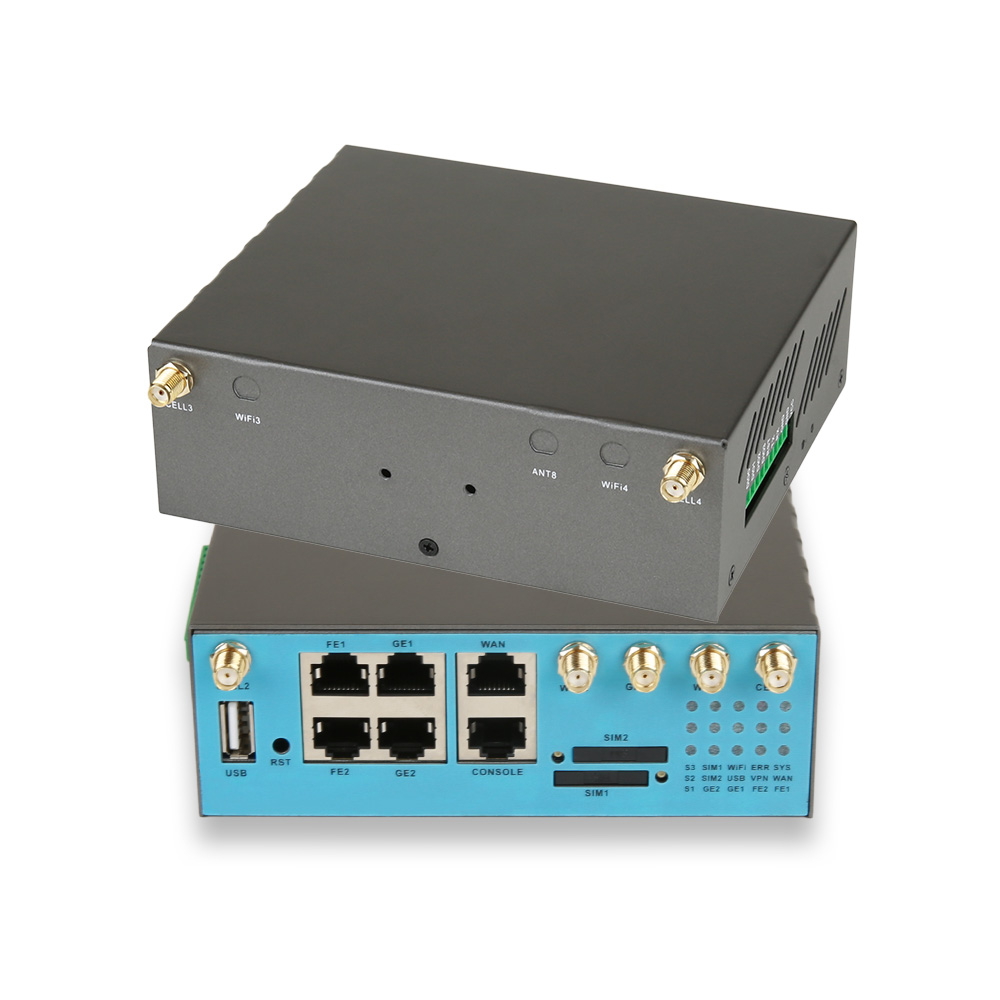
Most operators test devices in their own labs before allowing them on the network. Plan for this from the start:
Freeze a firmware version for the test and keep it for the first production batches.
Provide enough samples for lab and field testing, including spares.
Test the full service path, from activation and provisioning through VPN, monitoring, and firmware update.
Confirm certification for the markets where the service is sold. E-Lins products carry CE, FCC, and UKCA certification and comply with RoHS.
Branding and Customer Experience
The customer should see your brand, not the manufacturer's. E-Lins customisation covers brand presentation, labels, packaging and private-label presentation, and for some models, such as the H685t, OEM enclosure colours are listed. Quick-start guides written for your customers, with your support contacts, reduce first-day calls more than any other single measure.
Logistics at Operator Scale
Operator programmes move large volumes on fixed schedules. E-Lins supplied more than 100,000 units to a single project for a leading Indian telecom operator serving over 230 million subscribers, where the operator reached a 99.4% equipment online rate, cut per-site maintenance costs by 53% and improved batch management efficiency by 82%. The company reports annual supplies of 10,000 to 20,000 units to carrier-grade projects, monthly production capacity of tens of thousands of units in its own Shenzhen factory, stock preparation in 1 to 2 business days, and a 98.5% on-time delivery rate for volume projects.
Support Model and Service KPIs
A managed service is measured by availability and resolution times, so the device supplier's support must fit into the provider's own processes.
First line stays with the provider's helpdesk, which owns the customer relationship.
Second and third line go to the manufacturer for firmware, hardware, and packet-level analysis. E-Lins provides 7x24 remote technical support with an average response time of 10 minutes during business hours, packet capture analysis and remote debugging, and reports that 90% of issues are resolved remotely.
Device KPIs to track include online rate, reconnection events, firmware compliance across the fleet, and return rate. E-Lins reports an equipment online rate of 99.5% or higher for its industrial hardware.
Lifecycle. E-Lins provides lifetime free firmware upgrades, and its standard one-year warranty can be extended, which helps align device support with contract terms.
Why E-Lins for Operator Programmes
Shenzhen E-Lins Technology Co., Ltd. has worked in industrial wireless communication since 1999 and has been recognised as a high-reliability supplier for major global carrier projects. Operators and brand clients account for about 10% of its customers, alongside system integrators, utilities and contractors, and it works with telecom carriers and industrial distributors in more than 150 countries and regions. Its hardware is rated from -35°C to +75°C with 15KV ESD protection and 1.5KV electromagnetic isolation, and its firmware is developed entirely in-house, which gives service providers one engineering team to work with for both device behaviour and long-term updates.
For operators and service providers, choosing a 5G industrial router OEM manufacturer is really choosing a partner for the service itself. Start from the services you want to sell, test the full service path, and pick the manufacturer that can support it at your scale.
https://e-lins.com/
Shenzhen E-Lins Technology Co., Ltd.